

CVS Stock Price Prediction 2025 to 2035:- CVS Health Corporation (NYSE: CVS) has evolved from being just a retail pharmacy chain to one of the largest integrated healthcare service providers in the United States. With its presence in pharmacy services, health insurance, and primary care, CVS has become a powerhouse in the American healthcare landscape.
However, in recent years, CVS stock has experienced some turbulence due to rising healthcare costs, pharmacy reimbursement pressures, and investor concerns about competition from Amazon and Walmart Health. Still, long-term investors are optimistic that the company’s diversified model will continue to generate stable revenue and cash flow.
This detailed cvs stock forecast from 2025 to 2035 explores potential price trends, market opportunities, and the factors likely to influence its future trajectory.
About CVS Health Corporation
CVS Health is a diversified healthcare giant that provides pharmacy services, medical insurance, and health management. It operates across multiple segments:
- Pharmacy Services:
Manages prescription benefits for insurance plans and employers. This is the company’s largest revenue segment. - Retail/LTC:
Includes retail pharmacies across the U.S. and long-term care facilities. - Health Care Benefits:
Offers health insurance plans through its Aetna brand, which CVS acquired in 2018. - Health Services (MinuteClinic and HealthHUB):
Provides walk-in clinics and telehealth services that bring affordable care directly to patients.
CVS has built a vertically integrated model that touches nearly every aspect of healthcare — from prescriptions and insurance to in-store health services
Recent CVS Stock Performance
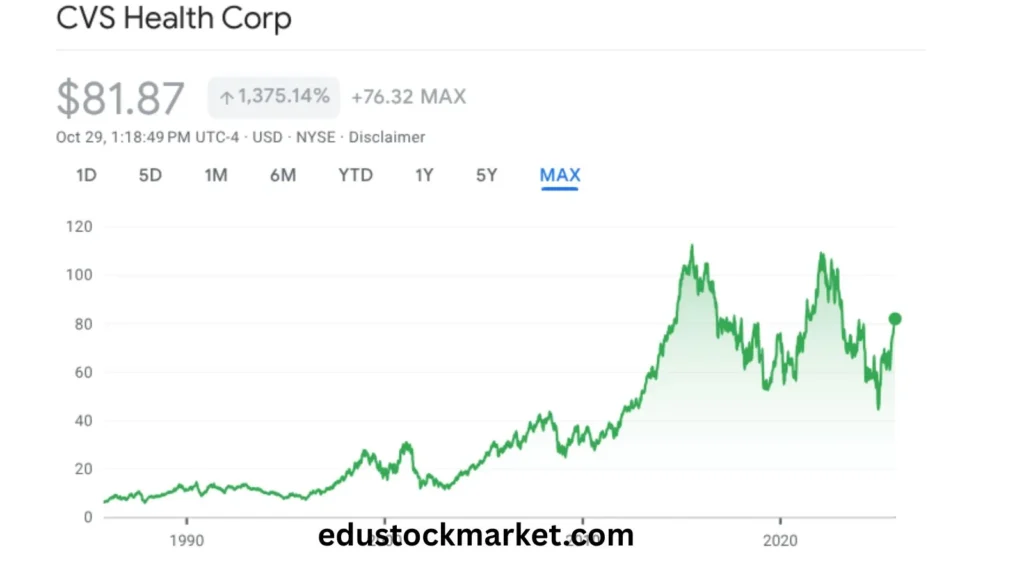
As of late 2025, CVS stock trades in the range of $60–$70 per share, following a challenging period marked by sector-wide volatility and reduced profit margins. Despite the near-term headwinds, analysts believe that CVS’s focus on expanding its health service footprint will drive future growth.
Key Financial Highlights (as of 2025):
- Market Cap: ~$85 billion
- P/E Ratio: Around 10x — indicating an undervalued position relative to healthcare peers
- Annual Revenue: ~$350 billion
- Dividend Yield: Approximately 3.7%
- Earnings per Share (EPS): ~$7.00
CVS remains a cash-rich, dividend-paying stock with a solid balance sheet — making it attractive for long-term investors seeking both growth and income.
CVS Stock Forecast 2025
In 2025, CVS is focusing heavily on expanding its healthcare delivery ecosystem through in-store clinics, virtual care, and strategic acquisitions.
CVS Stock Forecast for 2025:
- Minimum Price: $65
- Average Price: $72
- Maximum Price: $80
Key Growth Drivers for 2025:
- Increased demand for affordable healthcare services
- Continued integration of Aetna’s insurance operations
- Expansion of telehealth and primary care networks
- Strong cash flow supporting dividends and buybacks
Overall, the cvs stock forecast for 2025 suggests a slow but steady rebound after a few years of underperformance.
CVS Stock Forecast 2026 to 2030
Between 2026 and 2030, CVS is expected to strengthen its position as an integrated healthcare provider. The company’s focus on technology-driven healthcare solutions and in-store clinical services will be key to future revenue growth.
Projected CVS Stock Price Range (2026–2030):
| Year | Minimum Price | Average Price | Maximum Price |
|---|---|---|---|
| 2026 | $70 | $78 | $85 |
| 2027 | $75 | $85 | $92 |
| 2028 | $82 | $92 | $100 |
| 2029 | $90 | $102 | $112 |
| 2030 | $98 | $110 | $125 |
Key Growth Catalysts (2026–2030):
- Primary Care Expansion:
CVS is rapidly increasing its in-store MinuteClinics and HealthHUB centers, offering basic medical services, preventive care, and vaccinations. - Insurance and Pharmacy Integration:
The synergy between CVS’s retail and Aetna’s insurance operations will continue to generate strong recurring revenue. - Digital Transformation:
With growing consumer adoption of telemedicine, CVS’s digital health platforms could become a significant growth driver. - Stable Dividend Growth:
CVS’s commitment to returning capital to shareholders ensures steady income for investors. - Prescription Growth:
As the U.S. population ages, prescription volume is expected to increase, benefiting CVS’s core business.
By 2030, analysts expect CVS stock to reach $120 or higher, assuming steady EPS growth and dividend hikes.
CVS Stock Forecast 2031 to 2035
Looking further ahead, the cvs stock forecast from 2031 to 2035 points toward continued growth driven by long-term healthcare trends. The demand for accessible and affordable healthcare will only increase, and CVS is well-positioned to meet that demand through its omnichannel strategy.
Long-Term Price Forecast (2031–2035):
| Year | Minimum Price | Average Price | Maximum Price |
|---|---|---|---|
| 2031 | $110 | $125 | $135 |
| 2032 | $118 | $132 | $145 |
| 2033 | $125 | $140 | $155 |
| 2034 | $130 | $150 | $165 |
| 2035 | $140 | $160 | $180 |
Long-Term Growth Drivers:
- Healthcare Demand:
As the U.S. population ages, CVS’s retail health and insurance services will see increasing utilization. - Expansion of Medicare Advantage Plans:
CVS’s Aetna brand is gaining traction in Medicare Advantage, a highly profitable insurance segment. - AI and Automation in Healthcare:
CVS will likely integrate artificial intelligence for predictive care and customer service, improving efficiency. - Cost Management:
Ongoing optimization of store networks and supply chains will help maintain profitability.
By 2035, the cvs stock forecast suggests potential trading levels between $160–$180, representing a significant return for long-term investors.
Why CVS Could Be a Strong Long-Term Investment
CVS stands out among healthcare stocks for its vertically integrated model — spanning retail, insurance, pharmacy, and care delivery. This structure gives CVS a competitive edge and the ability to adapt to evolving healthcare needs.
1. Diversified Revenue Streams
Unlike pure-play pharmacy or insurance companies, CVS earns revenue from multiple sources — reducing risk during market fluctuations.
2. Stable Cash Flow and Dividends
CVS generates billions in free cash flow annually, allowing it to sustain dividends, repurchase shares, and reinvest in business growth.
3. Healthcare Industry Tailwinds
An aging population, increased chronic illnesses, and rising healthcare demand all favor CVS’s business model.
4. Tech Integration and Innovation
CVS’s digital initiatives, including telehealth and AI-powered pharmacy systems, are improving patient engagement and efficiency.
5. Undervalued Relative to Peers
Despite its large size and consistent profitability, CVS trades at a discount compared to healthcare peers like UnitedHealth and Cigna.
Risks to the CVS Stock Forecast
No forecast is without risk. While the long-term outlook for CVS is positive, investors should keep an eye on potential challenges.
1. Competition
Amazon’s entry into pharmacy delivery and retail healthcare poses a serious long-term threat.
2. Regulatory Pressure
Healthcare regulations and drug pricing reforms could impact CVS’s profit margins.
3. Reimbursement Compression
Lower reimbursement rates from insurers can weigh on the company’s pharmacy services division.
4. Debt Management
Although CVS has reduced debt since acquiring Aetna, it must maintain disciplined financial management.
5. Economic Downturn
Recessionary conditions could limit consumer spending and hurt discretionary healthcare services.
Analyst Opinions on CVS Stock
Most Wall Street analysts view CVS stock as a “Moderate Buy” for long-term investors.
Recent Analyst Ratings (2025):
- JP Morgan: Overweight, Target $85
- Morningstar: Fair Value Estimate $90
- Goldman Sachs: Neutral, Target $78
- Consensus: Moderate Buy
Analysts cite CVS’s strong fundamentals, expanding healthcare footprint, and undervalued price as reasons for optimism in the cvs stock forecast.
Conclusion
The cvs stock forecast from 2025 to 2035 points toward gradual but consistent growth. While CVS faces short-term challenges like competition and regulatory pressures, its integrated healthcare model, digital innovation, and stable dividends make it a strong long-term investment.
As the U.S. healthcare landscape evolves, CVS Health is poised to play a central role in delivering accessible care — both in-person and virtually. For investors seeking a mix of growth, stability, and income, CVS stock remains an appealing choice.
FAQs on CVS Stock Forecast
1. What is the current CVS stock price?
As of 2025, CVS stock trades between $65 and $70 per share, depending on market fluctuations.
2. Is CVS stock a good investment for 2025?
Yes. CVS offers a combination of stable earnings, a solid dividend, and long-term growth potential in healthcare services.
3. What is the CVS stock forecast for 2030?
By 2030, analysts expect CVS stock to trade between $110 and $125, supported by expansion in primary care and digital health.
4. How high can CVS stock go by 2035?
According to projections, CVS stock could reach $160–$180 per share by 2035 if it maintains steady growth and margin improvement.
5. Does CVS pay dividends?
Yes. CVS currently offers a dividend yield of around 3.7%, with room for gradual increases over the next decade.
6. What are the biggest risks to CVS stock?
Key risks include competition from Amazon, regulatory challenges, and reduced reimbursement rates from insurers.
7. How does Aetna’s acquisition impact CVS’s future?
The Aetna acquisition allows CVS to integrate insurance, pharmacy, and care delivery, creating a powerful, diversified healthcare ecosystem.
8. Is CVS investing in telehealth and digital care?
Yes. CVS continues to invest heavily in telemedicine and virtual healthcare services to meet growing digital health demand.