

Oracle Stock Price Forecast 2025 to 2040:– When it comes to enterprise software and cloud computing, Oracle Corporation (NYSE: ORCL) remains one of the biggest and most influential names in the business world. Founded in 1977, Oracle has evolved from a traditional database giant into a full-fledged cloud and AI powerhouse. In recent years, the company’s strong cloud growth, strategic acquisitions, and consistent profitability have pushed investor confidence higher.
But what lies ahead? In this detailed blog post, we’ll break down the oracle stock forecast from 2025 to 2040 — analyzing fundamentals, growth drivers, financial outlook, and potential risks. Whether you’re an investor seeking long-term gains or just curious about Oracle’s trajectory, this analysis offers a complete picture of where Oracle stock could be heading.
Company Overview: Oracle’s Core Business Strength
Oracle is best known for its database management systems, but its ecosystem extends much further today. The company offers:
- Cloud Infrastructure (OCI) – Competing with AWS, Microsoft Azure, and Google Cloud.
- Fusion and NetSuite Cloud Applications – Supporting ERP, CRM, and HR solutions.
- AI & Analytics Services – Integrating artificial intelligence into data analytics and cloud operations.
- Hardware & Software Licensing – Providing enterprise-grade systems for global corporations.
Oracle’s long-term success stems from its ability to modernize legacy clients while attracting new business through competitive pricing and integrated cloud offerings. The growing demand for AI-ready data infrastructure has positioned Oracle as a core partner for digital transformation across industries.
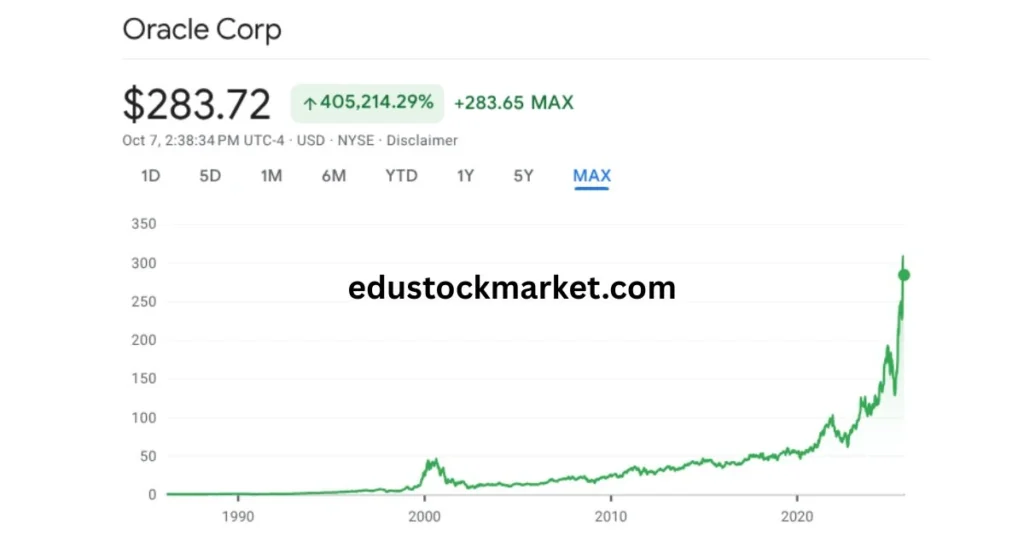
Oracle’s Recent Financial Performance
Before diving into the oracle stock forecast, it’s important to understand how the company is performing today.
- Revenue (FY 2024): $52.96 billion, up 7% year-over-year.
- Net Income: $10.5 billion, showing solid profitability.
- Cloud Revenue: Up 20% year-over-year, now contributing more than 40% of total revenue.
- Operating Margin: Above 40%, one of the strongest in the software industry.
- Dividend Yield: Around 1.4%, with consistent payout growth.
Oracle’s cloud segment has been the biggest driver of growth, especially through its Cloud Infrastructure (OCI) and Fusion ERP services. With continued expansion in enterprise AI and data analytics, the company is well-positioned for future growth.
Key Growth Drivers Supporting Oracle Stock Forecast
- Cloud Transformation Momentum
Oracle’s shift from traditional licensing to cloud subscriptions is accelerating revenue consistency and scalability. OCI, although smaller than AWS or Azure, is growing faster percentage-wise. - Artificial Intelligence Integration
Oracle is embedding AI into its core products, helping clients automate workflows, enhance analytics, and optimize resource management. - Strategic Partnerships
Collaborations with Microsoft, Nvidia, and other tech leaders have strengthened Oracle’s position in the AI and hybrid-cloud markets. - Data Security & Compliance Leadership
Oracle’s databases remain the gold standard for enterprise-level data security — a key differentiator in industries like finance, healthcare, and government. - Global Expansion & Acquisitions
Strategic acquisitions, such as Cerner (healthcare software), have diversified Oracle’s revenue base and deepened its cloud capabilities in regulated sectors.
Oracle’s Competitive Advantages
- High Switching Costs: Enterprises rarely switch database providers due to complex integrations.
- Vertical Integration: From hardware to software, Oracle controls the full technology stack.
- Customer Retention: Long-term contracts and subscription models create steady recurring revenue.
- Cash Flow Strength: Oracle generates billions in free cash flow annually, supporting dividends and buybacks.
These strengths make Oracle a defensive yet growth-oriented tech stock — ideal for long-term investors seeking exposure to the cloud and AI revolutions.
Oracle Stock Forecast 2025 to 2040
Below is a year-by-year outlook for oracle stock forecast, based on current financial trends, market conditions, and analyst projections.
Oracle Stock Forecast 2025
- Expected Price Range: $145 – $160
- With steady cloud adoption and AI-driven upgrades, Oracle could post high-single-digit revenue growth. Investors may continue rewarding its margin stability and dividend policy.
Oracle Stock Forecast 2026
- Expected Price Range: $160 – $175
- OCI expansion and greater adoption of Fusion ERP software could push valuation multiples slightly higher.
Oracle Stock Forecast 2027
- Expected Price Range: $170 – $190
- Strategic collaborations in AI and machine learning integration should boost Oracle’s brand value in data-centric industries.
Oracle Stock Forecast 2028
- Expected Price Range: $185 – $210
- By this stage, Oracle’s cloud business may represent more than 60% of total revenue. Profit margins will likely stay robust, fueling investor optimism.
Oracle Stock Forecast 2030
- Expected Price Range: $220 – $270
- A strong market position in hybrid and multi-cloud systems could help Oracle outperform expectations, particularly as data management demand surges globally.
Oracle Stock Forecast 2035
- Expected Price Range: $310 – $380
- The company could become a dominant AI + cloud player, with a balanced business model combining stability, innovation, and recurring income streams.
Oracle Stock Forecast 2040
- Expected Price Range: $400 – $520
- By 2040, Oracle could emerge as one of the top-tier AI infrastructure providers, benefiting from global digitalization. Long-term investors could see substantial appreciation if growth remains consistent.
Factors That Could Influence Oracle Stock Performance
1. Global Cloud Market Trends
If cloud infrastructure demand continues to grow above 15% annually, Oracle’s market share could expand even further.
2. AI and Automation
Integrating AI into database and ERP systems will help Oracle improve client retention and expand into new industries.
3. Competitive Landscape
AWS, Microsoft Azure, and Google Cloud remain strong competitors. Oracle’s success will depend on its ability to differentiate through security, pricing, and hybrid solutions.
4. Economic Conditions
Interest rate shifts and global recessions can impact corporate IT spending, temporarily slowing Oracle’s revenue growth.
5. Share Buybacks and Dividends
Oracle has a history of rewarding shareholders. Continued buybacks and dividend increases could attract income-oriented investors, supporting the oracle stock forecast.
Valuation Analysis
Oracle currently trades at a P/E ratio around 20–22x, slightly below peers like Microsoft and Adobe. This suggests Oracle still offers relative value.
If earnings per share (EPS) grow from $6.50 in 2024 to around $15 by 2035 — consistent with its 8–10% annual EPS growth trend — Oracle’s stock could easily exceed $350–$400 within the next decade.
Moreover, with rising free cash flow and disciplined capital allocation, Oracle’s stock valuation could continue to compound through 2040.
Risks to Consider
- Cloud Market Saturation: Slower enterprise adoption or pricing pressures could reduce margins.
- Regulatory Scrutiny: Data protection laws and compliance requirements may add operational complexity.
- Competition Pressure: Microsoft, Amazon, and Google could outspend Oracle in innovation.
- Execution Risk: Integration challenges from acquisitions may impact performance.
- Macroeconomic Factors: Inflation or a global slowdown could dampen tech spending.
Despite these risks, Oracle’s consistent profitability and strong cash position make it resilient compared to most tech peers.
Investment Outlook: Should You Buy Oracle Stock Now?
If you’re a long-term investor seeking exposure to enterprise cloud, AI, and big data, Oracle stock remains an attractive option. The company offers:
Steady dividend income
Predictable earnings growth
Strong brand loyalty among enterprise clients
Sustained free cash flow generation
While short-term volatility is likely, the long-term trajectory of the oracle stock forecast remains bullish.
For conservative investors, Oracle offers the best of both worlds — growth potential from cloud computing and reliability from its mature, cash-generating core business.
FAQ
1. What is Oracle’s main source of revenue?
Oracle generates most of its revenue from cloud services, software licensing, and support. The cloud division, including OCI and Fusion Apps, is now the fastest-growing segment.
2. What factors influence the oracle stock forecast?
The oracle stock forecast is influenced by cloud adoption rates, AI integration success, competition from Microsoft and Amazon, and overall global IT spending trends.
3. Is Oracle a good long-term investment?
Yes. Oracle’s strong cash flow, consistent profitability, and growing cloud presence make it a solid long-term investment for conservative growth-oriented investors.
4. How much could Oracle stock be worth by 2030?
By 2030, analysts project Oracle stock could trade between $220 and $270, depending on earnings growth and cloud expansion success.
5. What are Oracle’s biggest risks?
The main risks include competition from other cloud giants, slower cloud migration among clients, and macroeconomic downturns that reduce tech spending.
6. Does Oracle pay dividends?
Yes. Oracle pays quarterly dividends and has a track record of increasing its payouts consistently, appealing to income-focused investors.
7. Can Oracle reach $500 by 2040?
Under bullish conditions — with AI, cloud, and database growth maintaining double-digit rates — the oracle stock forecast suggests the stock could surpass $500 by 2040.
8. How does Oracle compare to Microsoft or AWS?
While smaller in market share, Oracle offers better data integration, lower cloud costs, and stronger hybrid capabilities, giving it an edge in enterprise solutions.
9. Will AI play a major role in Oracle’s growth?
Absolutely. Oracle’s integration of AI into databases, analytics, and ERP systems is expected to drive efficiency, improve margins, and attract new enterprise clients.
10. Is Oracle stock overvalued right now?
Not really. Given its earnings growth and P/E ratio near industry averages, Oracle remains fairly valued or slightly undervalued compared to peers like Microsoft and Adobe.
Conclusion
The oracle stock forecast from 2025 to 2040 paints a promising picture for investors who believe in the power of data, AI, and cloud transformation. Oracle’s successful evolution into a full-service cloud company has already rewarded shareholders, and its roadmap suggests even more upside.
By 2025–2030, Oracle could see gradual appreciation as its cloud and AI integration mature. Between 2030–2040, the company’s dominance in enterprise technology may push its valuation to new highs, driven by global demand for intelligent, secure, and scalable data solutions.
In short:
- Short-term (2025–2028): Moderate gains, steady growth.
- Mid-term (2029–2035): Strong expansion with AI-driven tailwinds.
- Long-term (2036–2040): Potential for exponential compounding if Oracle maintains innovation leadership.